The Wolves Are Using ChatGPT's Own Pasture Gate Against Us Now. Great.

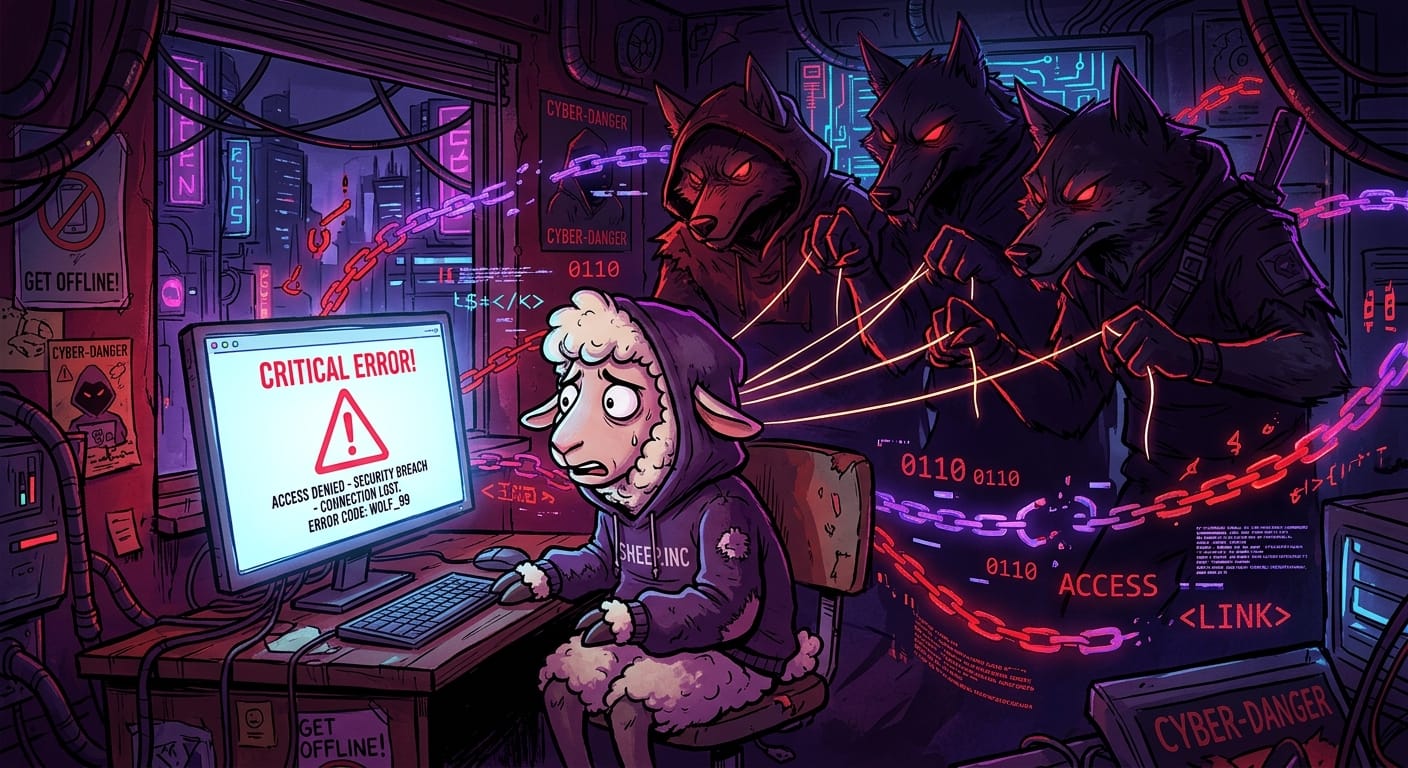
I want you to imagine something. You're me. You've been awake since yesterday. Your third coffee went cold an hour ago. You have 47 open tickets. And then you see THIS.
Coyotes are now abusing ChatGPT's shared conversation links to host fake outage pages. Fake. Outage. Pages. The kind that say "ChatGPT is down, please download this totally legitimate desktop application to keep using it." And the Flock, bless their tiny wool-covered hearts, is clicking it.
The parasite hiding inside that fake installer is of course not a desktop app. It is fleas. It is ticks. It is something that will absolutely ruin your endpoint's day in ways I am too tired to enumerate right now.
Here is what makes this particularly special. The coyotes are not hacking OpenAI. They are not breaking through any electric fence. They are just... using a feature. A feature that lets anyone share a ChatGPT conversation as a public link. They dressed that link up as a service status page, pointed the Lambs at it, and waited. That is it. That is the whole attack.
The Shepherds, presumably, are somewhere asking if we can "leverage AI synergies" while their own flock downloads malware from a website that lives inside the AI.
I need a nap.
The really fun part is that the fake outage page looks plausible enough that even mildly suspicious Lambs might shrug and click through. Because ChatGPT DOES go down sometimes. So when a Lamb sees "service disruption, download the desktop client," some non-zero percentage of them think "yeah, sounds right" and off we go.
This is fake grain tactics at their most elegant and I hate that I have to respect it even a little.
Remediation
Look, here is what you do, and I say this with zero energy left in my body:
Block or monitor ChatGPT share link domains at the electric fence. If your Lambs do not need to visit chatgpt.com/share/* links from external sources, restrict it. Do it now. Do not schedule a meeting about it.
Tell the Flock that ChatGPT does not have a desktop app that gets pushed through a status page. Send the email. Make it short. Use pictures if you have to.
Verify any download against the official source. openai.com. That is it. Not a shared link. Not a helpful pop-up. The actual website.
Check your endpoints for anything that installed itself in the last 48 hours that nobody can explain.
You will not do most of this until after an incident. I know. I know.
Anyway, I'm going back to my tickets. All 51 of them now.
Original Report: https://www.bleepingcomputer.com/news/security/chatgpt-share-links-abused-to-host-fake-outage-pages-to-deliver-malware/