The Wolves Got In Because Someone Left The Gate Key On A Fence Post

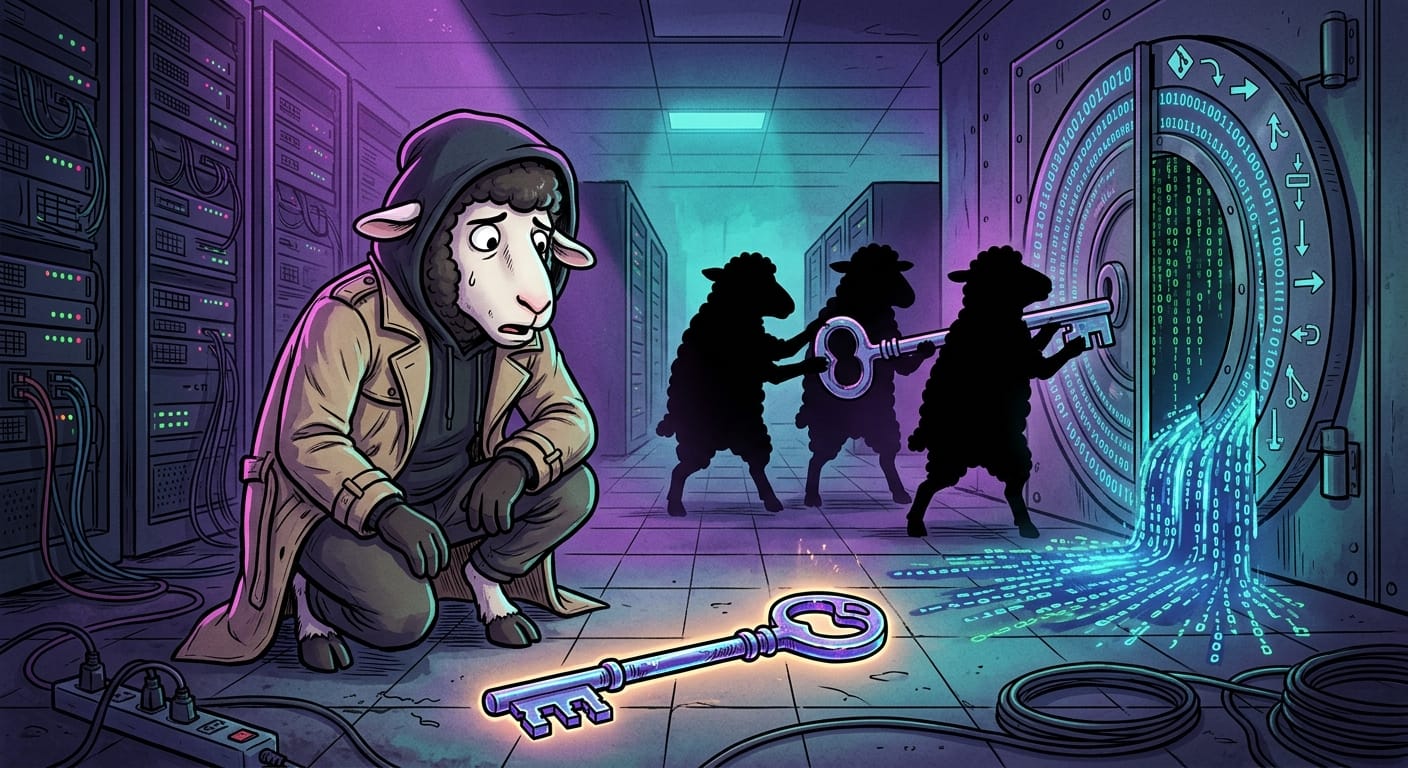
I want you to sit with that for a moment.
A master key. Committed to a public repository. In the year 2026.
I have spent thirty-one years in this field. I watched grown professionals argue about RSA key lengths over a 14.4k baud connection. We memorized our credentials. We trusted no one. And now we are losing supply chain integrity because someone accidentally gift-wrapped their kingdom's skeleton key and mailed it to the entire internet.
The incident: LiteLLM, a popular Python package, had its Agent Platform master key committed to a public GitHub repository on May 27th. A wolf found it, naturally, because wolves are patient and GitHub is a very well-lit pasture. The attacker used that key to steal tokens, infiltrate the release pipeline, and push a malicious version of the package to the flock at large.
Every lamb who installed that package got fleas. Congratulations to all involved.
What kills me, and I mean this professionally, is the pipeline itself. The Sky Pasture ecosystem has convinced an entire generation of developers that automation is safety. It is not. It is convenience dressed up in a fleece vest. In the old days, a release required physical sign-off. Magnetic tape did not push itself to production. A human being, with hands and a conscience, had to be present.
Now we have keys floating around in configuration files like loose wool on a barbed wire fence, and we act surprised when the coyotes show up.
The Shepherds, of course, will issue a statement about "enhanced security posture" and "lessons learned." They always do. Then they will go back to their standing meetings about Q3 roadmaps.
I need a moment.
Remediation
Since apparently we have to say this out loud:
Audit your repositories. Every single one. Right now. Not after the meeting. Tools like git-secrets or trufflehog will scan for committed credentials. Use them. They are blunt instruments, but blunt instruments work. I have always respected a blunt instrument.
Rotate everything. If that key touched a system, assume the system is compromised. Burn it down and start over. This is not paranoia. This is Tuesday.
Treat your CI/CD pipeline like it is hostile territory. Because it is. Secrets belong in a vault, not a config file. HashiCorp Vault, AWS Secrets Manager, I do not care which. Pick one and use it properly.
Implement branch protection and require human review on release tags. A wolf cannot push a malicious release if a human has to physically approve it. Radical concept, I know.
If your release pipeline can be hijacked by a leaked text string, you have not built a pipeline. You have built a flap in the fence.
Stay suspicious out there, you absolute amateurs.
Original Report: https://thehackernews.com/2026/10/leaked-litellm-master-key-let-attackers.html